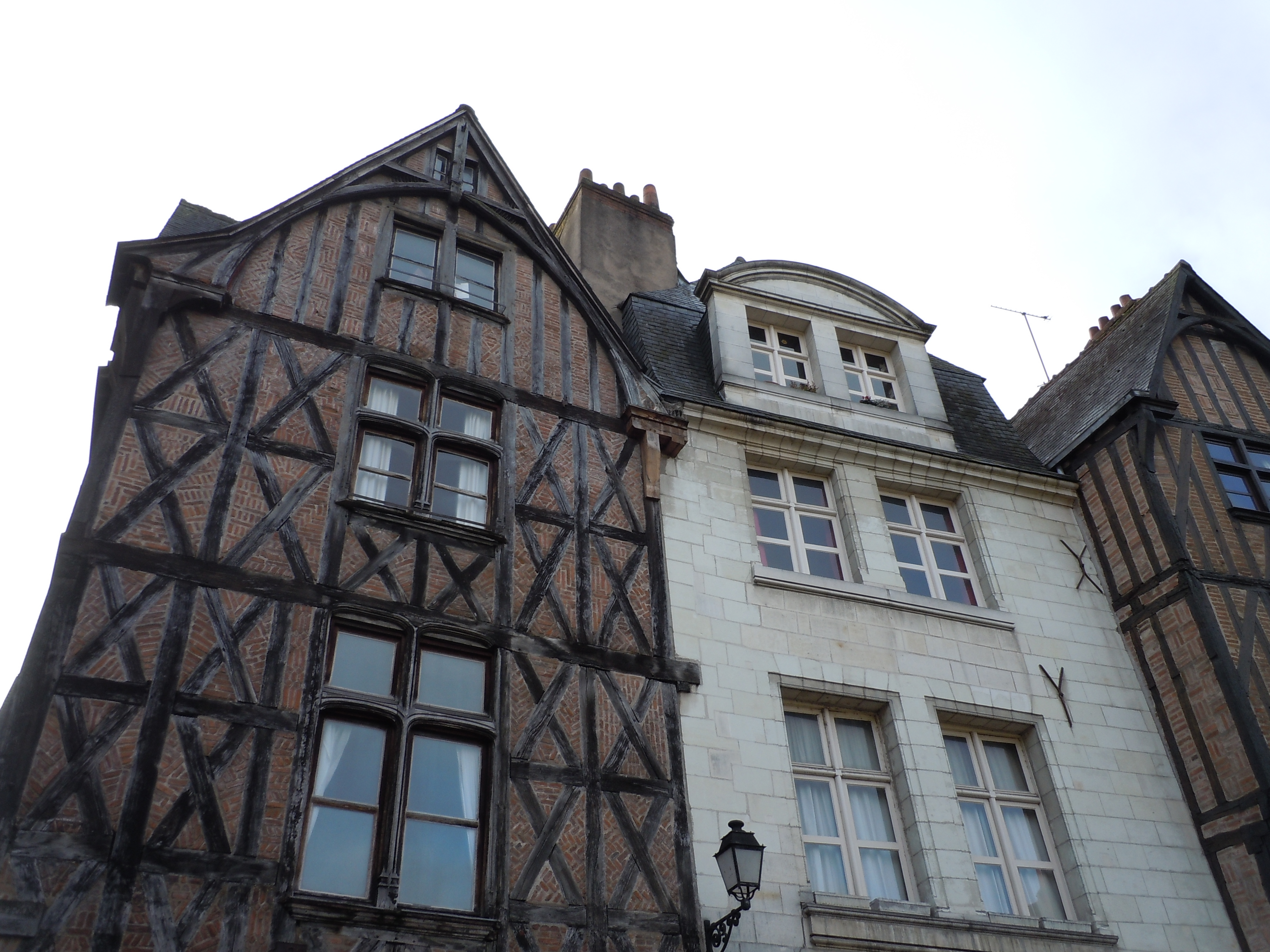
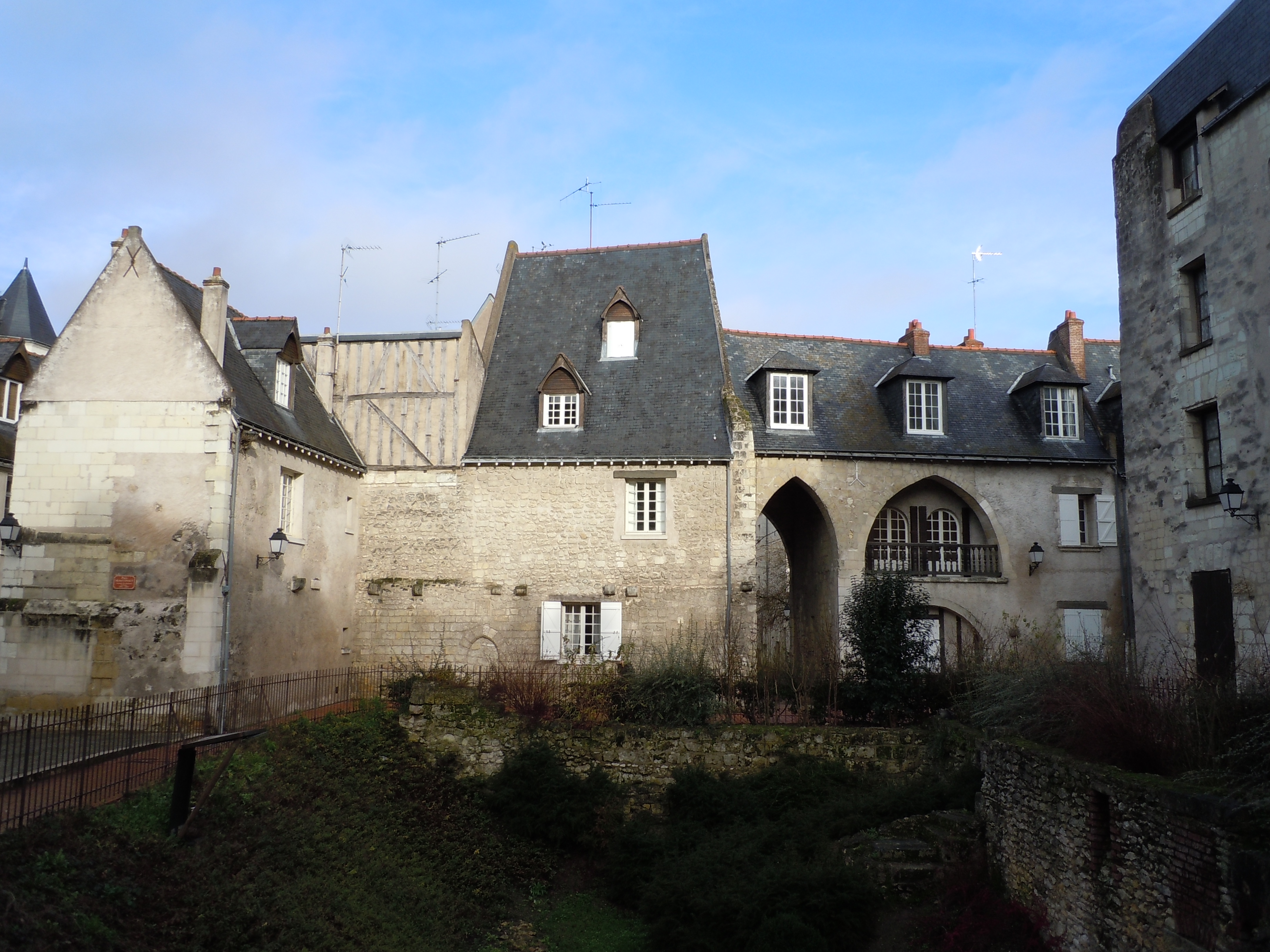
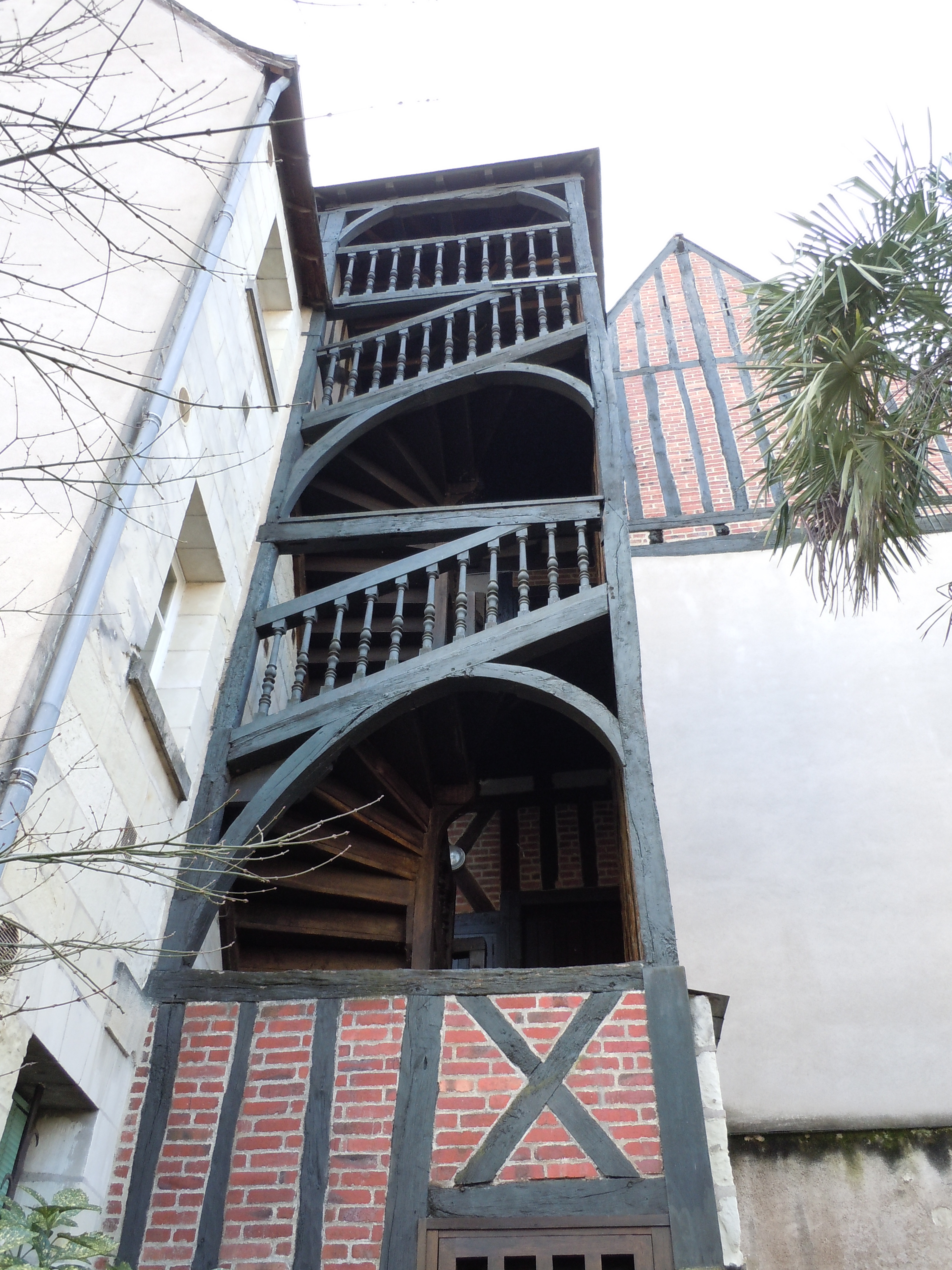
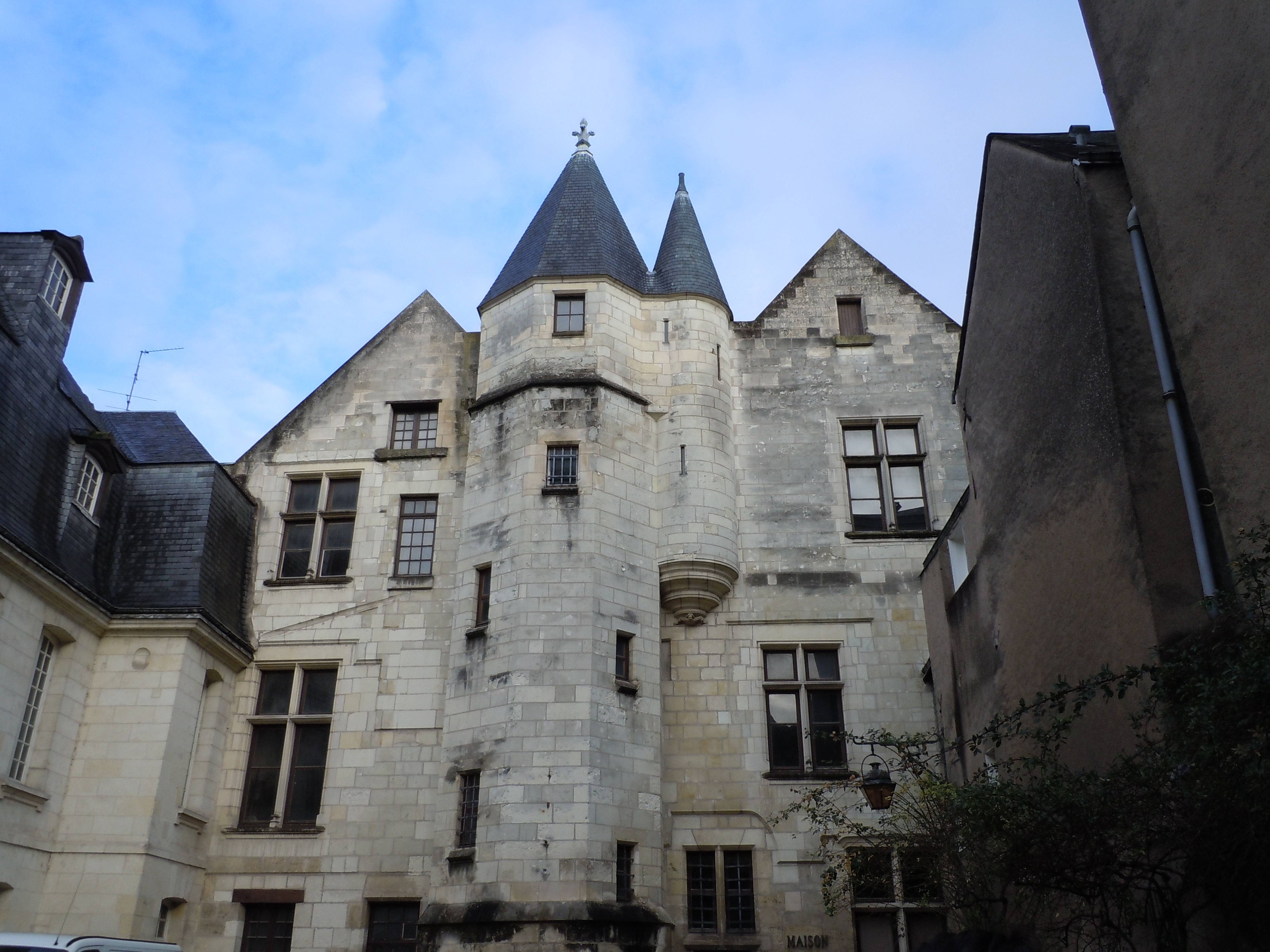
Tours is the quintessential quaint little French town and it has a very historic feel to it thanks to its old city center, Place Plumereau (a.k.a ‘Place Plum’) with buildings dating back from the Middle Ages.
The Architecture of Place PlumMore Tours Architecture… And More….… And One More….
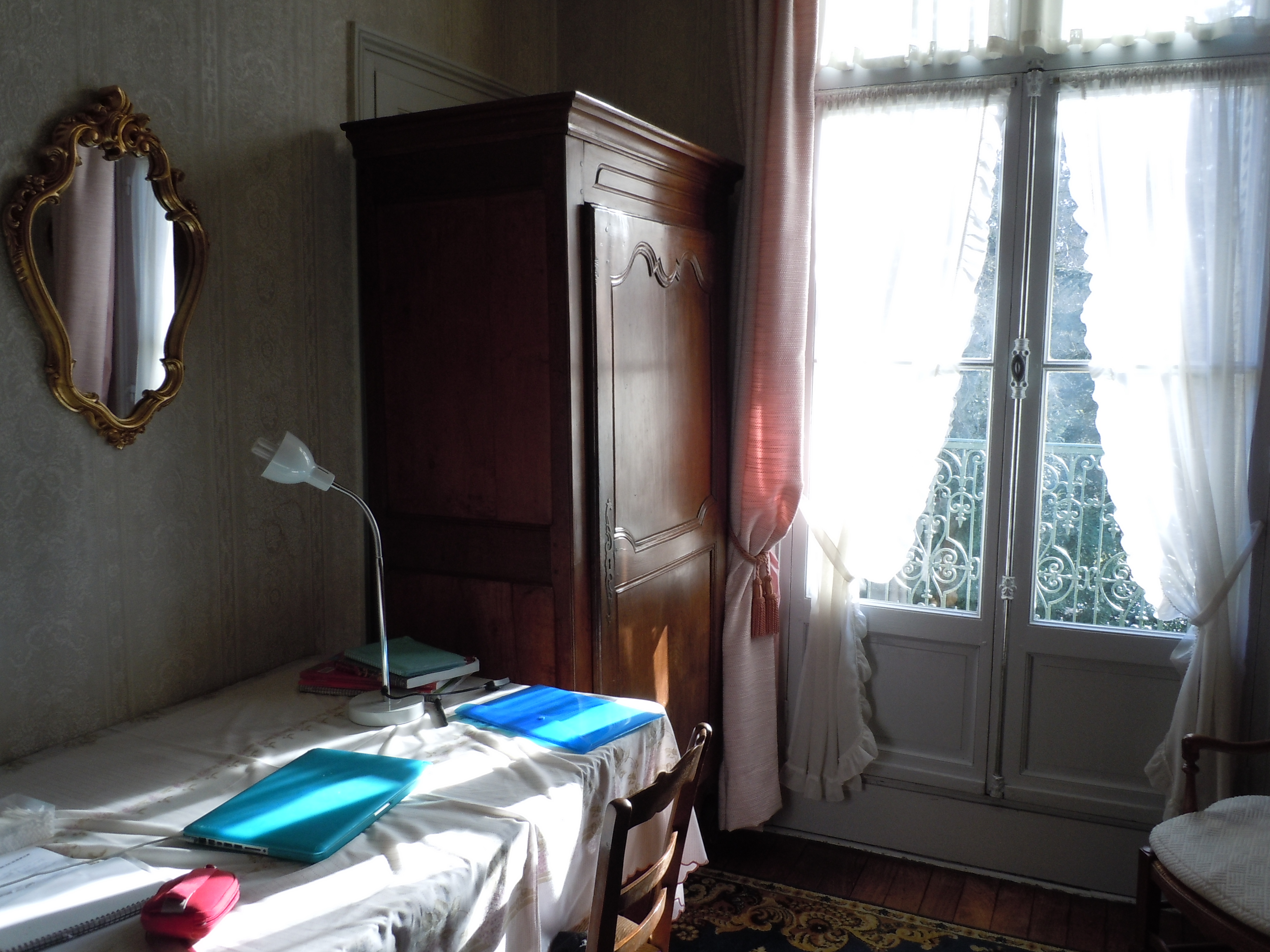
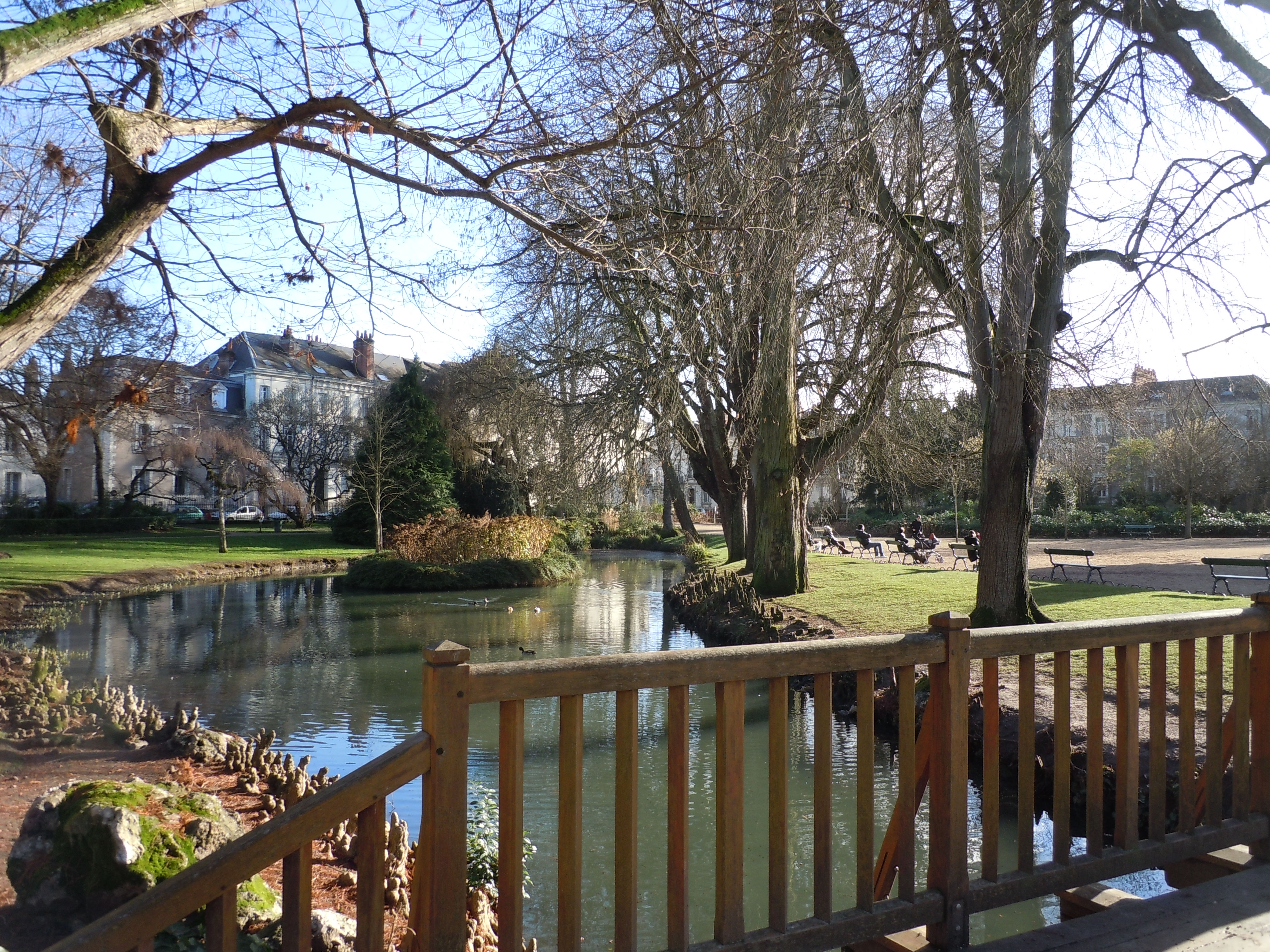
I did another home-stay in Tours, this time with a lovely elderly woman and her older daughter. The house I stayed in probably predated America, so the heating system was a tad sketchy and the high cost of heat in France meant that it was a very, very cold January. Truth be told, the hot water was so sparse in my shower that I learned how to bathe in 5 minutes, every other day (and that’s 5 minutes from clothes off to clothes on). But did I mention the glorious French windows in my bedroom overlooking a park? Totally worth it.
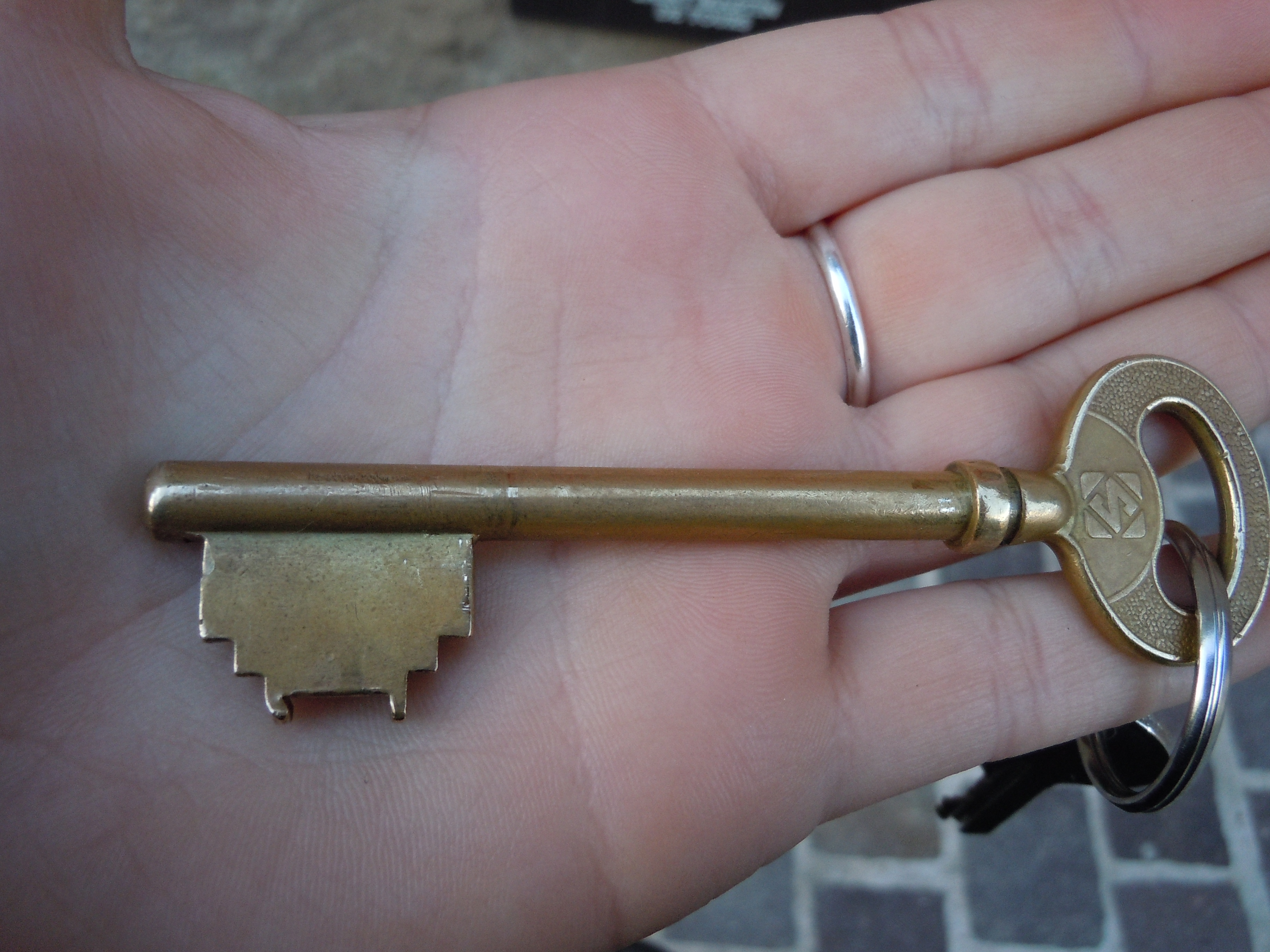
Gotta Love a Good French WindowThe Park Across the Street from my WindowMy Key. This Amused Me to No End.
My host mother and her daughter were some of the sweetest, most hospitable people I’ve ever met. They picked me up at the train station one Sunday afternoon completely disoriented and barely able to keep my ‘Madame’s and ‘Señora’s straight. It didn’t take them long to figure out that I barely spoke French (nor me very long to determine that they spoke only slightly better English) so our first few dinners were spent around a very large French-English dictionary. But they were patient, and I got better… eventually.
One thing that I have to gush about is how damn good the food was. My host mother was a fabulous cook and I inhaled weird things like snails (land and sea) and beets (previously a mortal enemy) with gusto. My favorite thing that ma mère made, however, was a classic from her native Brittany (in the north-west of France); buckwheat crêpes with ham, Emmenthal cheese, and a fried egg, served with alcoholic cider. Yum. Yum. Yum.
I should have a picture of this fantastic dish, of course, but I was too busy scarfing it down to snap a photo so forgive me.
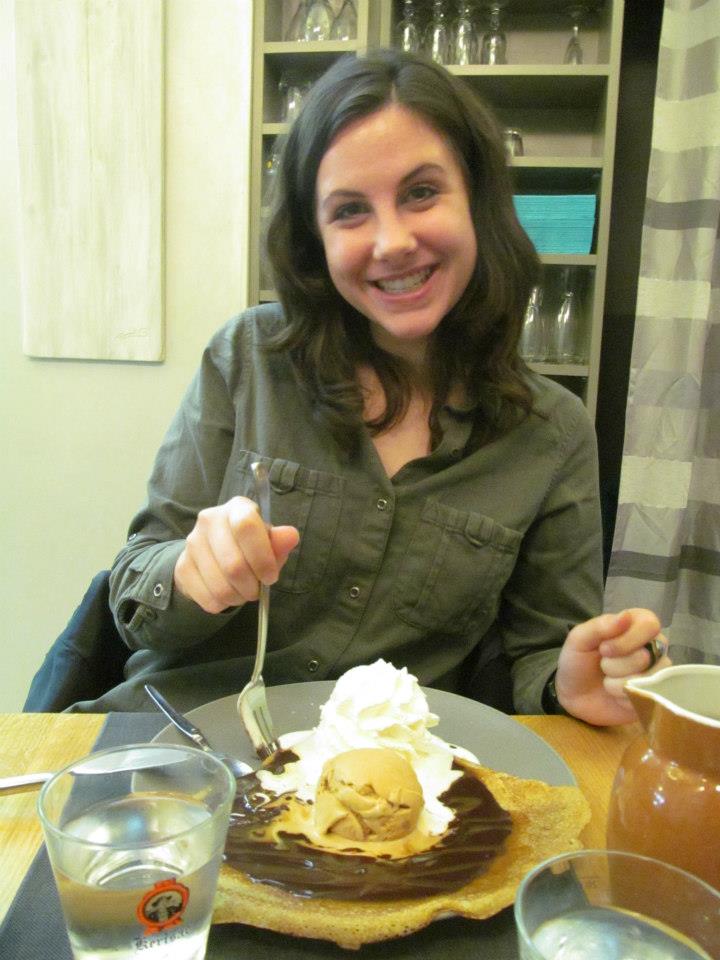
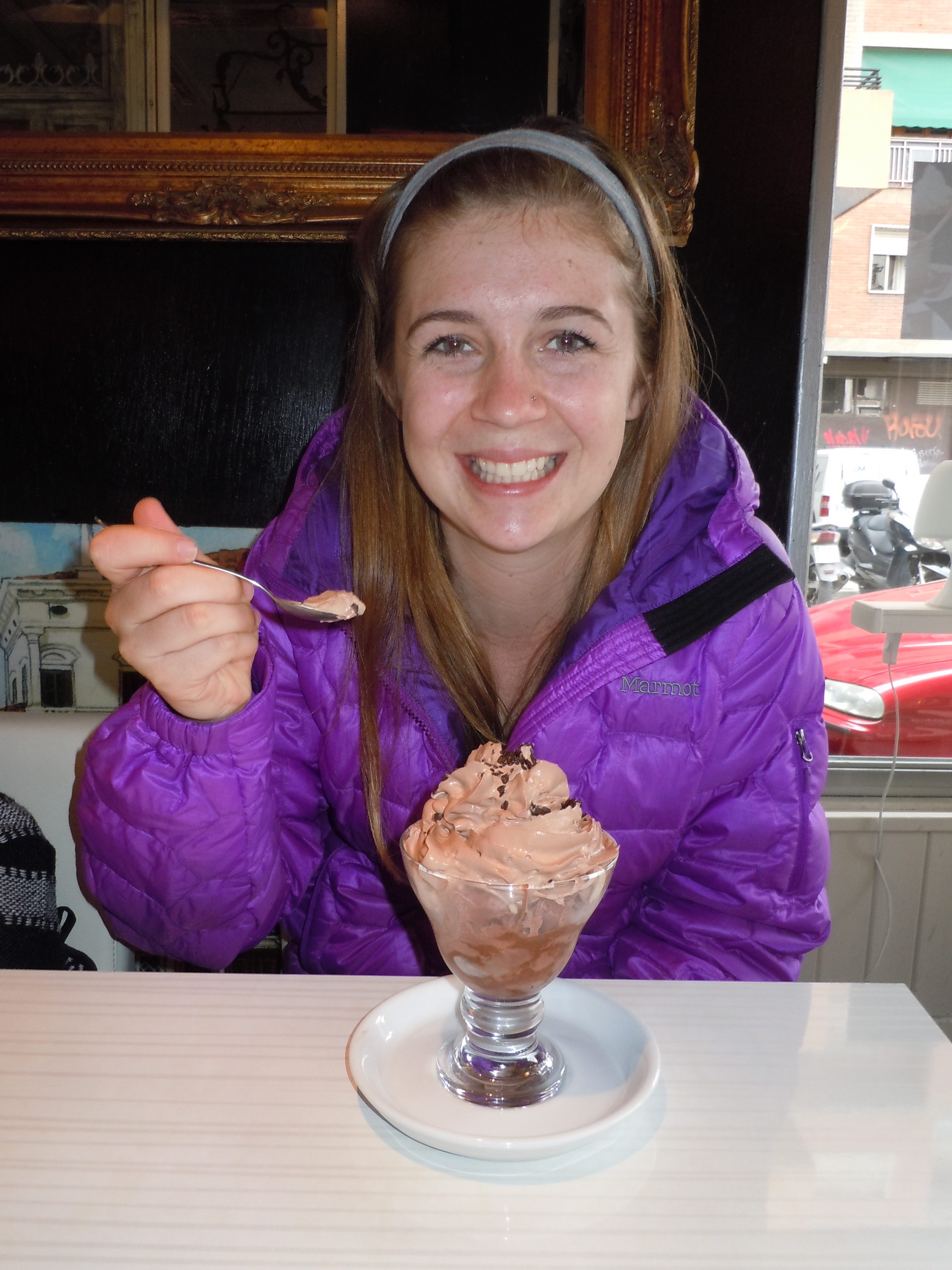
Instead, enjoy this photo of me eating a caramel and hot fudge crêpe!
My flight from Philadelphia International Airport to Aeropuerto Granada was the stuff nightmares are born of. It started in Philly, where I learned that my airline ‘didn’t exist’ (cue first heart attack), then that the airline did exist but wouldn’t send my luggage all the way through (cue second heart attack), then that everything was fine.. until I got to Heathrow. There I learned that my flight to Madrid also didn’t exist (heart attack 3 – you’d think that I’d have learned by now..), then that it did, but that it had been moved until the next day (h.a. 4), then that I had 10 minutes to find it and board (h.a. 5 and 6). In the airport in Madrid I nearly missed my flight due to a misunderstanding of the change in time zones (h.a. 7), but did manage to get on that flight to spend the hour-long trip falling asleep with my head in the aisle and getting clipped by a severely irritated stewardess and her food cart… multiple times. In Granada they lost my luggage.
So, basically, I was not in the most positive of moods to start my semester in Spain. Then I went outside.
I came to Granada in early September, when Andalucia is arguably at her best. The sun was blazing, palm trees were swaying, and the air carried a cool breeze to counteract the tropical heat. There was no humidity. I had found paradise.
At Home in Granda
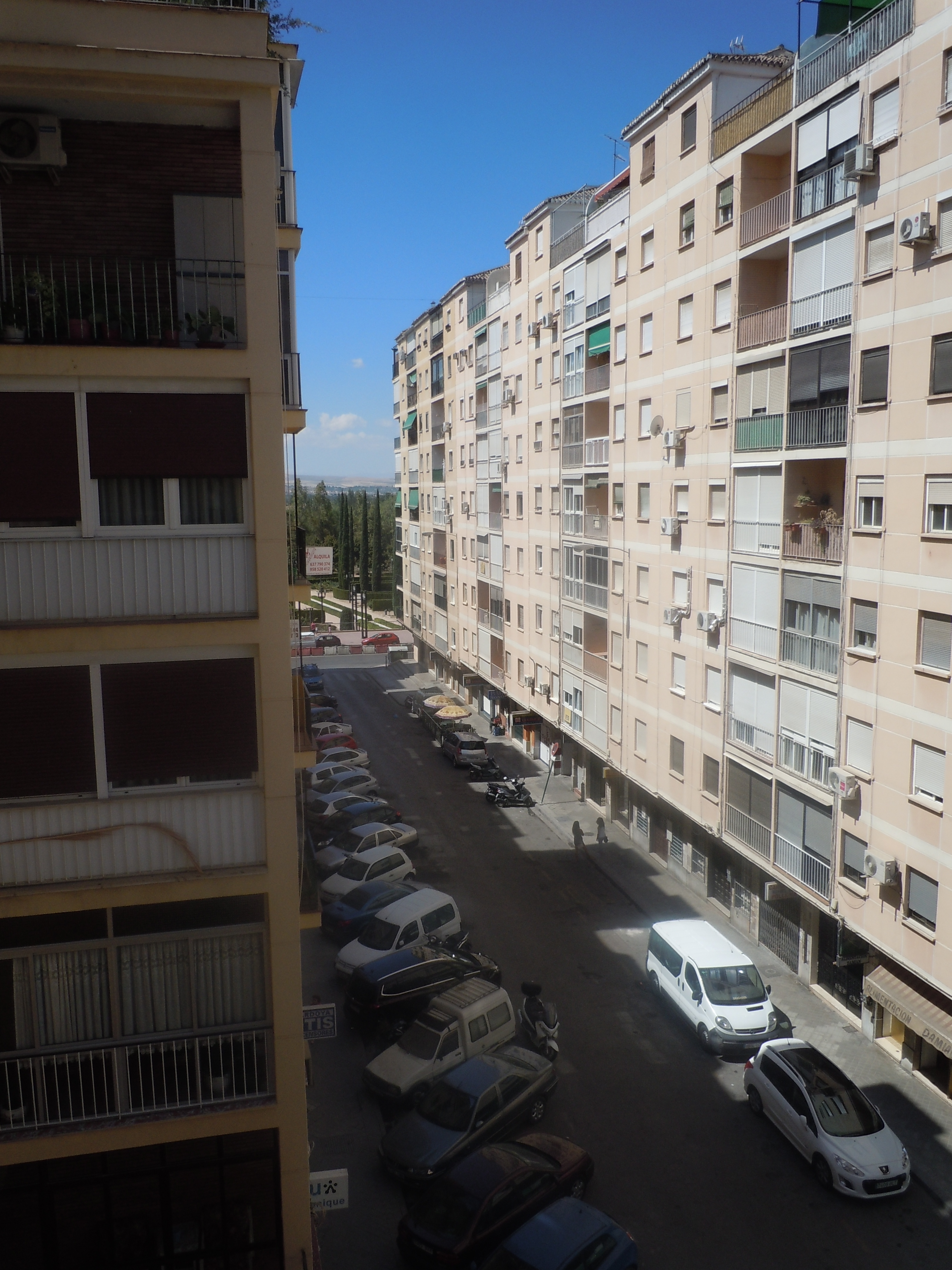
I lived in a home-stay in Granada, in a fourth-floor ‘piso’ (large Spanish apartment with multiple rooms) down on Calle Ángel Barrios (… which was about a half hour walk from school, but a ten minute walk from Botellon).
The room I shared with a fellow Arcadian was bright and sunny with a cactus-filled balcony that looked out onto a park. Our host-mother was this tiny blonde Spanish woman named Mercedes who would zip around every morning in a housecoat cleaning and cooking until lunch, then collapse for the rest of the afternoon on her couch, chain smoking and watching Spanish soap operas. Mercedes was a very… spirited woman. She and I had few problems, but she didn’t particularly care for my roommate, Sarah, who, among committing other Spanish Sins (she didn’t eat everything on her plate – ALWAYS), was a vegetarian. However, if one of us so much as had the sniffles, Mercedes had a full arsenal of medications that she could whip out at a moment’s notice. Add to this eclectic mix my host ‘cousin,’ Laura – Mercedes’ 18-year-old niece who vacillated between acting like she was 12 and acting like a delinquent, and the assortment of European students who stayed in the extra spare rooms for anywhere from a few days to a few weeks, and things were guaranteed to always be interesting en mi casa.
School (yes, I did go to school)
I went to school in El Centro de Lenguas Modernas (CLM), which is a division of the Universidad de Granada (founded in 1531 by Charles V, as long as we’re name dropping) and housed in a beautiful, sunny building near the heart of the city.
I spent the month of September taking an intensive Spanish course Monday – Friday, fours hours straight each day (a dios mío!). Then, in October, I began my real semester. Classes were held twice a week, Monday through Thursday, and I took courses in Spanish history, Latin American history, Spanish Grammar, Spanish Cinema, and (haha) French. It goes without saying, but all of the classes were held in Spanish (yes, even the French one).
Living la Vida Loca
A Spanish daily routine is truly something else, and it took me a while to adapt. To begin with, meals and mealtimes really threw me. Breakfast is usually something very light, such as toast with olive oil (yum!) and a coffee around 8 a.m. (or whenever you start your day). Lunch isn’t until about 2 p.m. or 3 p.m. and then it’s a huge, heavy feast (a typical lunch for us was a HUGE portion of paella, possibly some croquetas [essentially, fried mashed potato balls], slices of Manchego cheese, salad, and fruit) after which is an almost necessary siesta from about 3 p.m. to 5 p.m. Then dinner is around 10 p.m. and is usually something small but deep fried and filling. I spent about my first month in Spain continuously fluctuating between starving and stuffed… and then Sarah and I started keeping an impressive stash of chocolate and snacks (mostly cookies) in our room… after that I was almost constantly stuffed.
The Spaniards live their lives on a later schedule. Most shops and banks and what not don’t open until about 10 a.m. and then the whole world pretty much shuts down between 3 p.m. to 5 – 6 p.m… only to open back up and continue doing business until about 9 – 10 p.m. Spanish nightlife (and in Granada, nightlife is the lifestyle) doesn’t begin until about midnight, when one goes to a bar to grab drinks with friends. From there, sometime around 2 a.m., one goes to Botellon to ‘socialize’ more and, around 4 – 5 a.m. until about 7 a.m. one goes to a club. After that, one is supposed to stumble to a cafe to eat chocolate and churros before crawling into bed, but I never was able to make it that far.
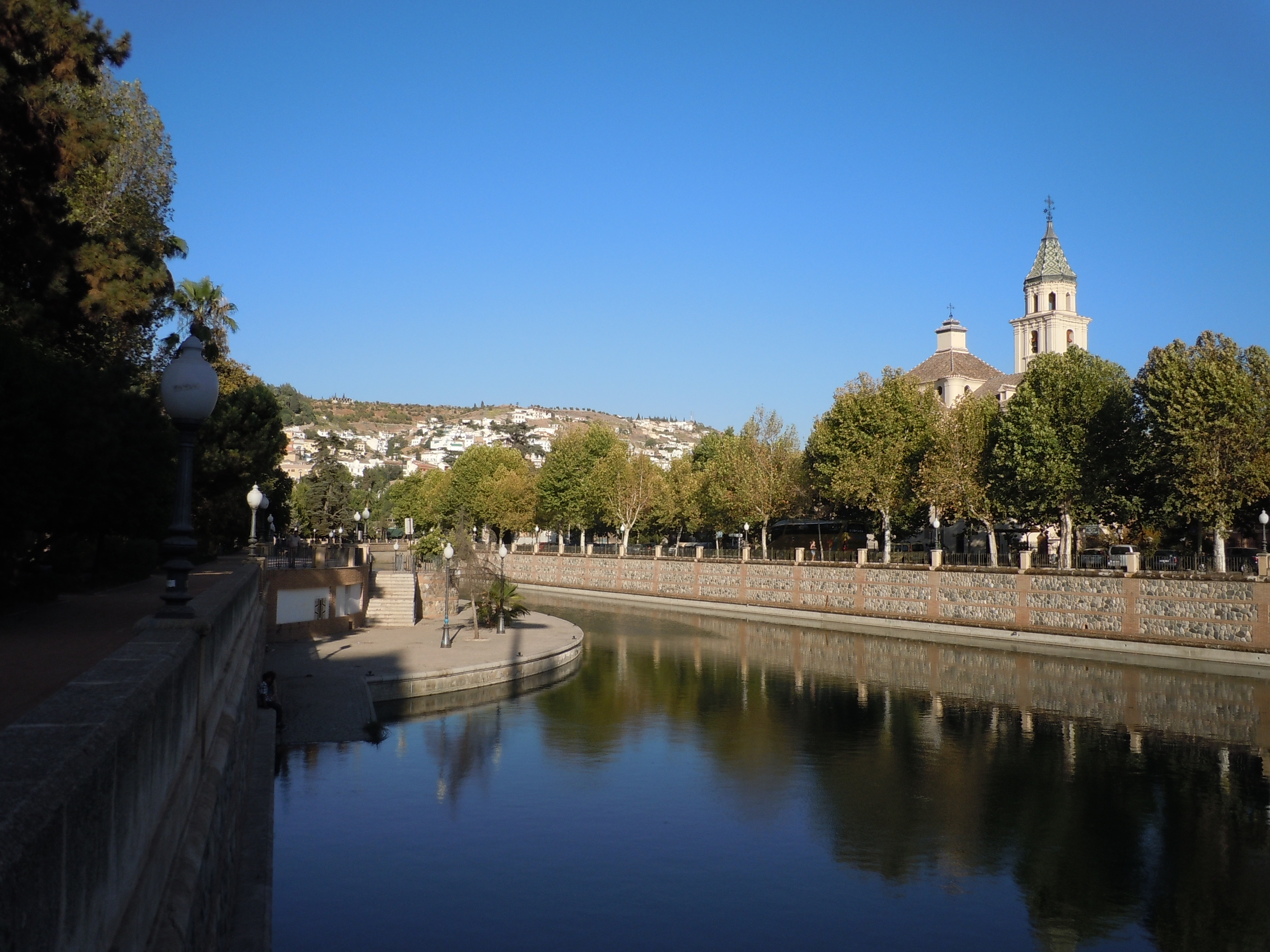
So what did I do with myself when I wasn’t too busy studying? Well, three day weekends are glorious, and I usually took advantage of them to travel to some amazing places (See posts for October – December). I did experience a lot of the nightlife, of course, but one of my favorite ways to kill time was to explore the city. I loved walking up and down the river or wandering the streets, but one notable afternoon in Granada, my friend, Mariah (check out her blog here) and I decided to go out for hot chocolate… and ended up in the most adorable little bar with the craziest frozen chocolate mousses and a stellar chocolate fondue. What can I say? It’s hard to study abroad.
Brace yourselves, this is going to be a long post…
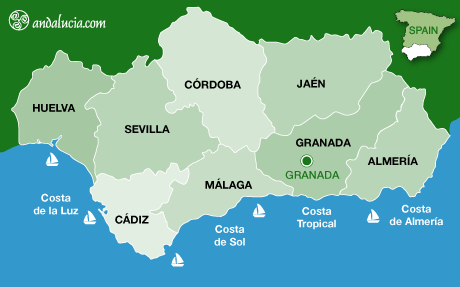
I was lucky enough to call the glorious little Spanish town of Granada home from the beginning of September until the end of December 2012. Granada is located in the very south of Spain, in a region called Andalucia (‘Al Andaluz’ in Spanish … spelling phonetic).
Granada is famous for being the ‘Last Islamic Stronghold in Spain,’ or the last city that Ferdinand and Isabella had to conquer to purge their united Spain of anyone and everything that wasn’t a passionate Catholic during the Reconquista. Before Ferdinand and Isabella swept in, Spain had a long history of Christians, Jews, and Muslims living together and intermingling fairly well, most of the time. This history is evident in everything from the language (For example, Andalucians call olives ‘aceitunas’ which is of Arabic origin, while other fellow Latin languages call olives, well, olives) to the architecture.
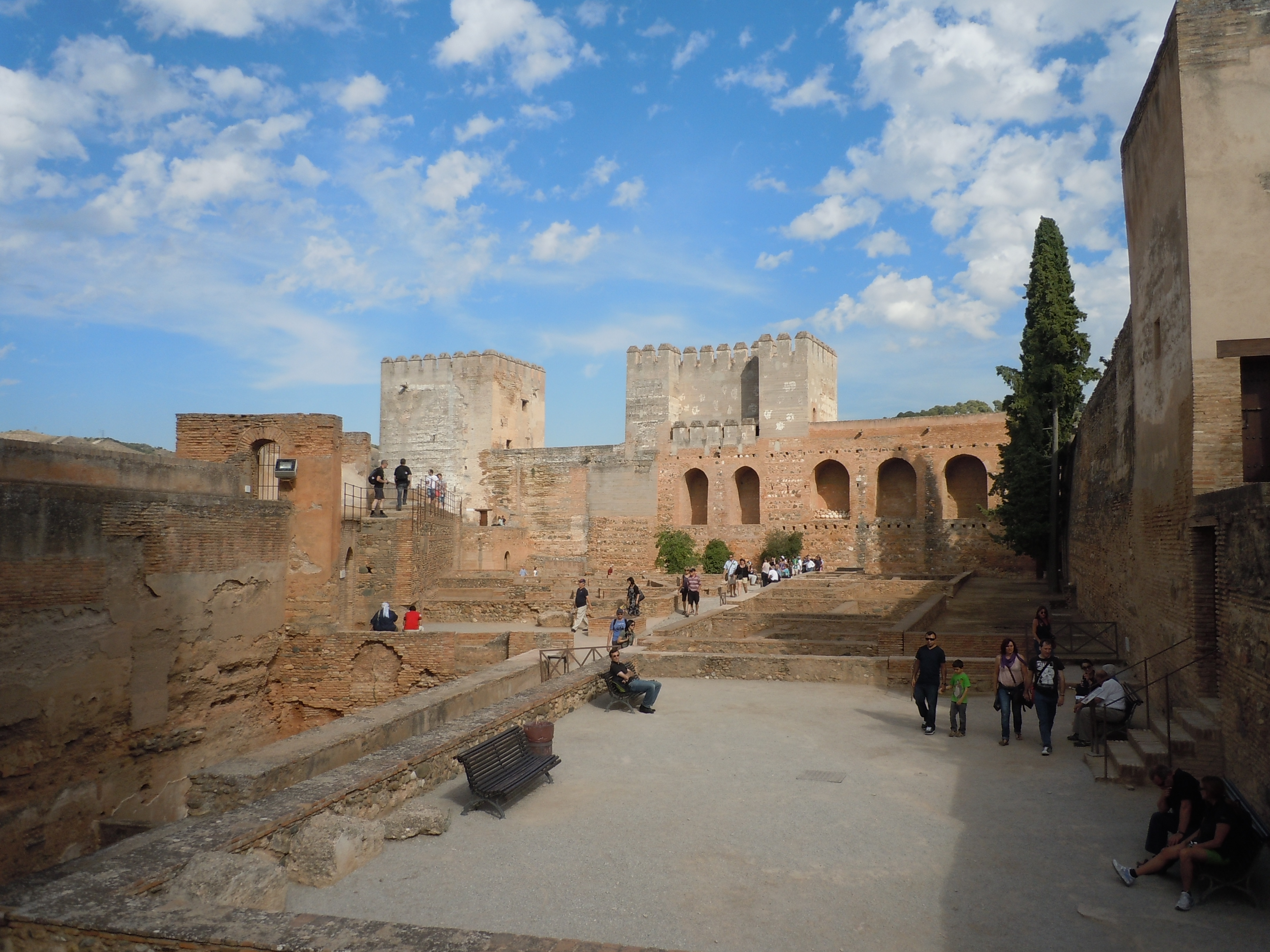
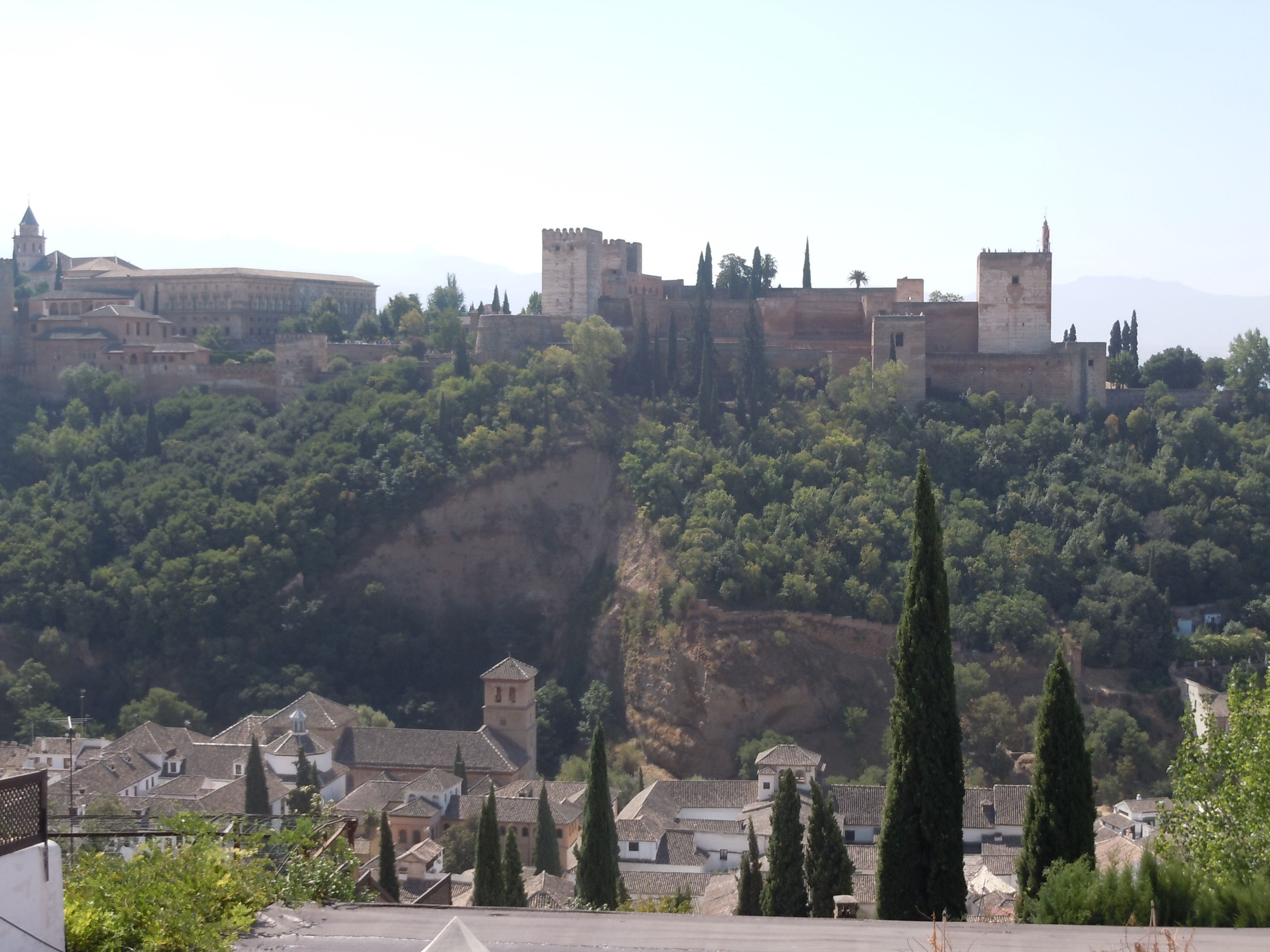
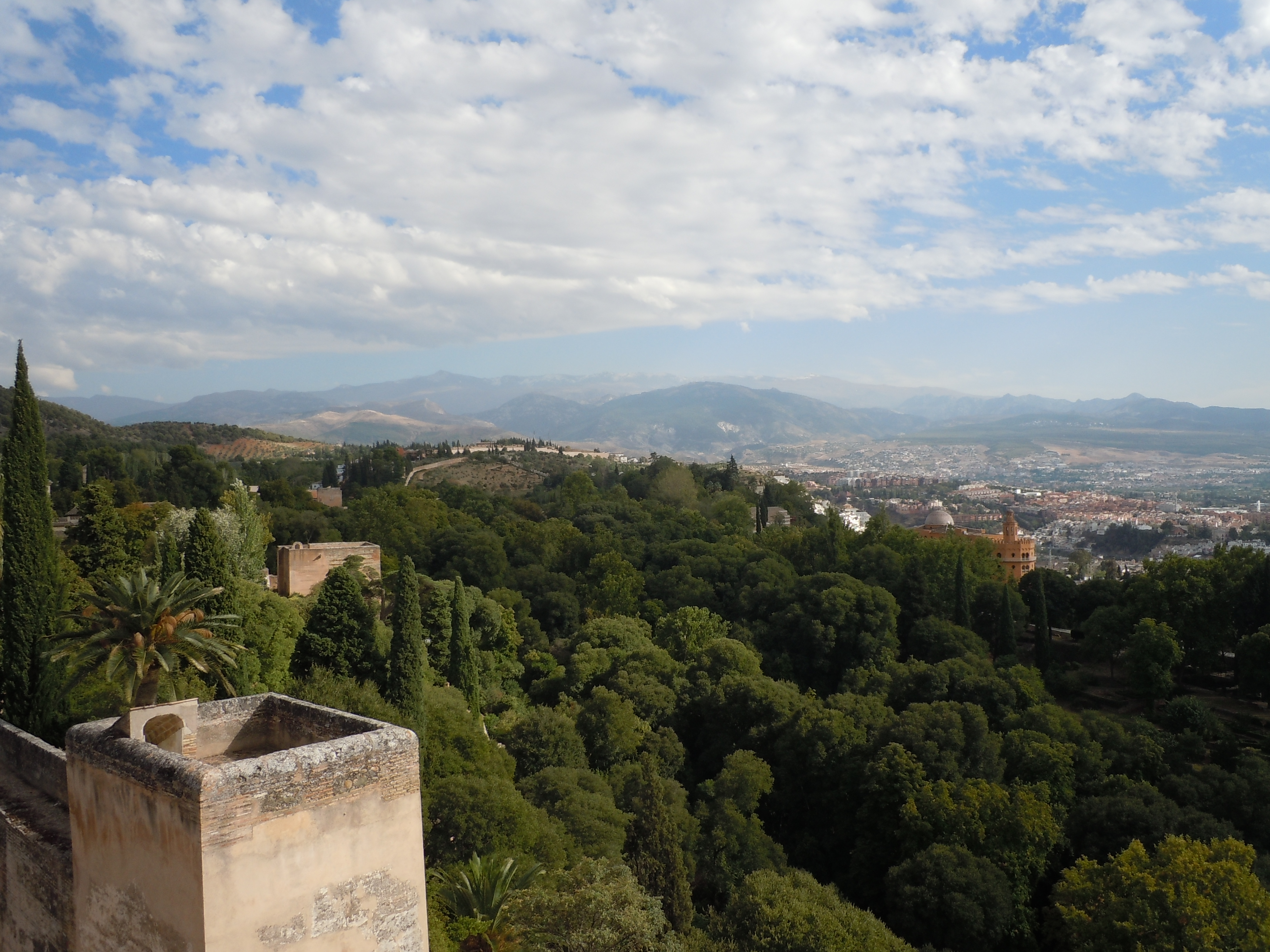
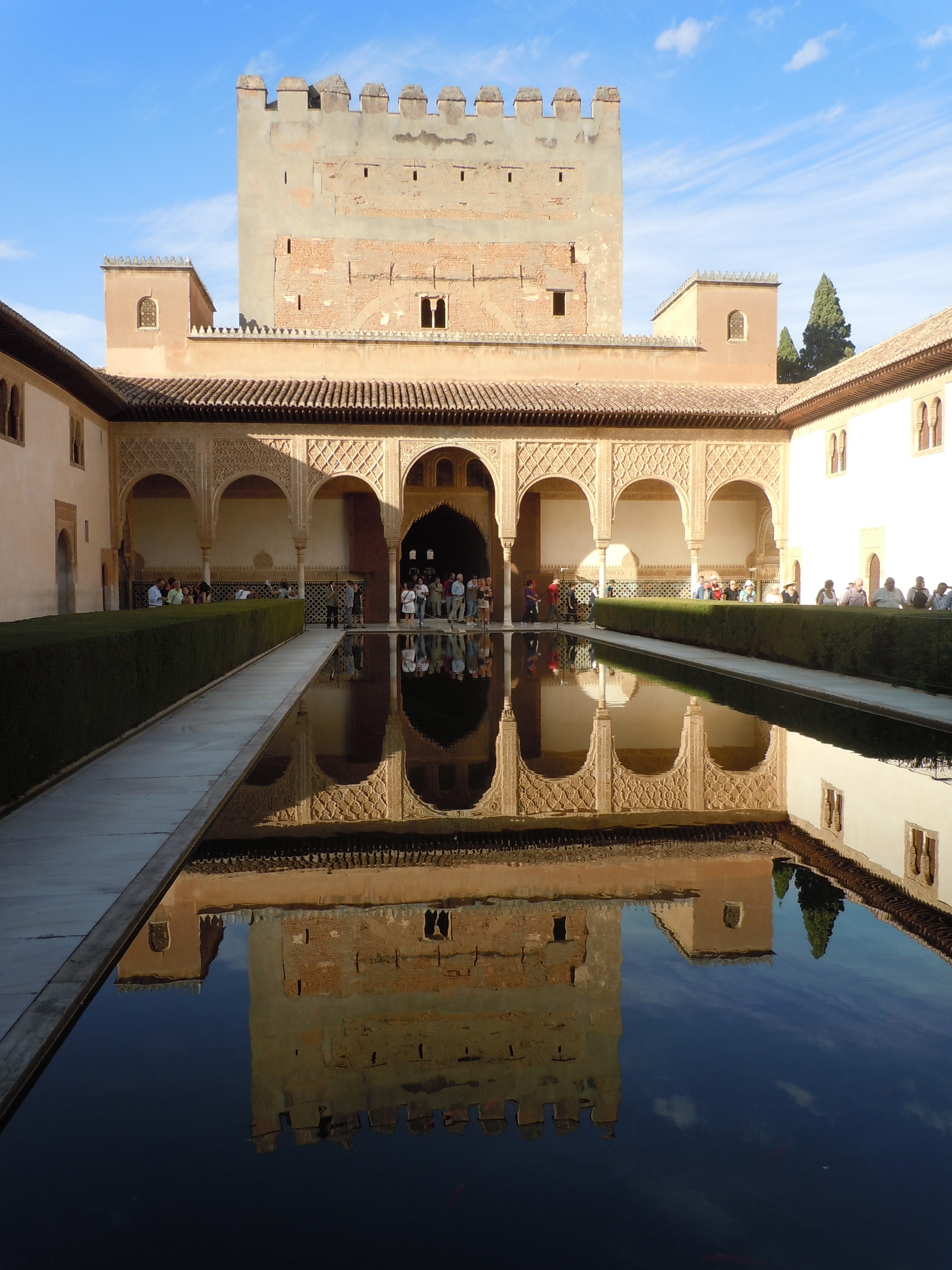
Perhaps the best example of the mix in styles and powers in Granada is the Alhambra. This ancient Arabic palace is truly a sight to behold. It sits grandly on the top of a mountain and commands an impressive view of the surrounding landscape, once acting as part royal palace, part military stronghold. It was originally built and occupied by Islamic rulers, but after Ferdinand and Isabella came in, Christian monarchs added churches and other ‘Christian’ additions. It is quite an interesting mix of architecture and history.
The Symbol
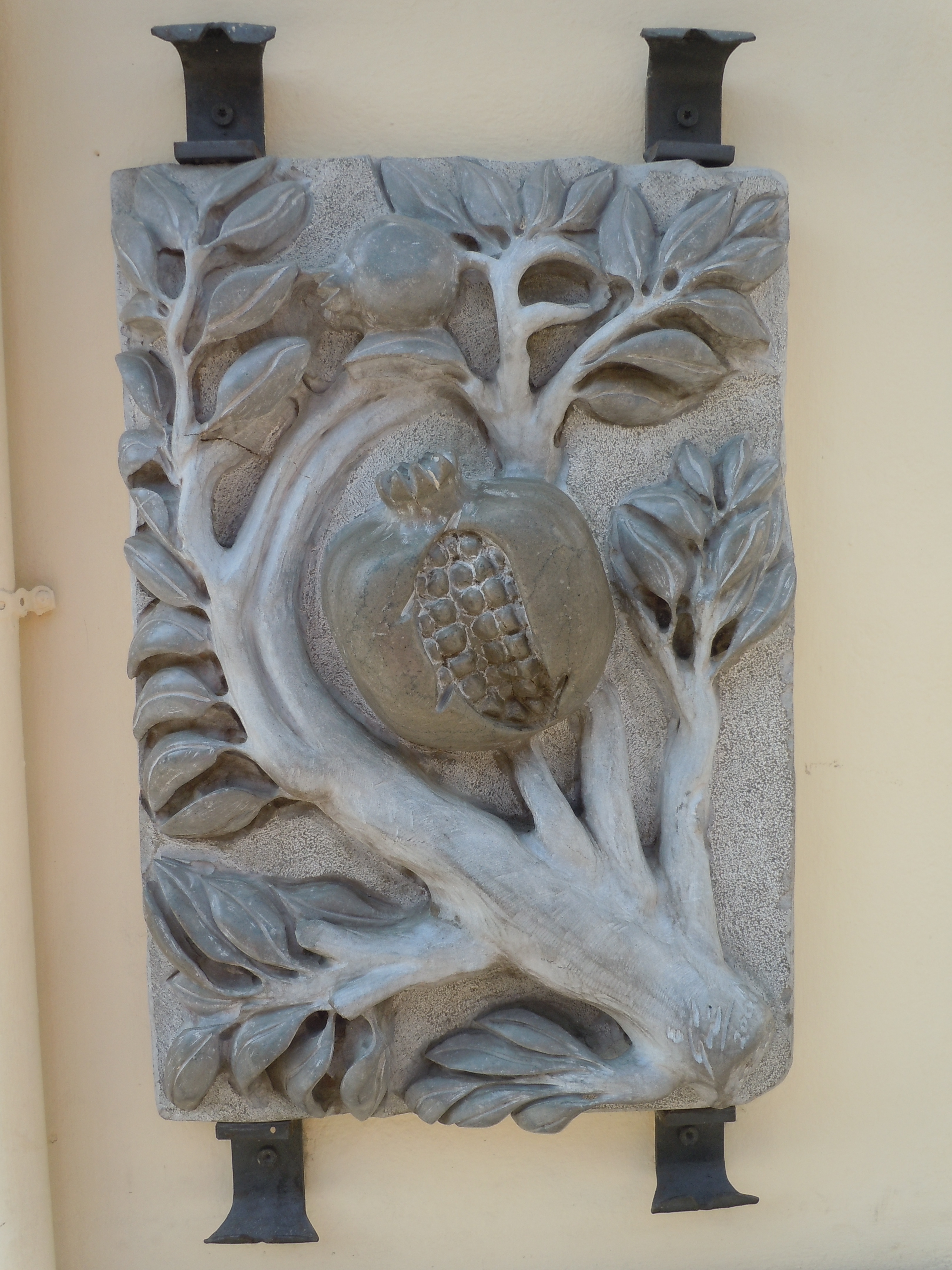
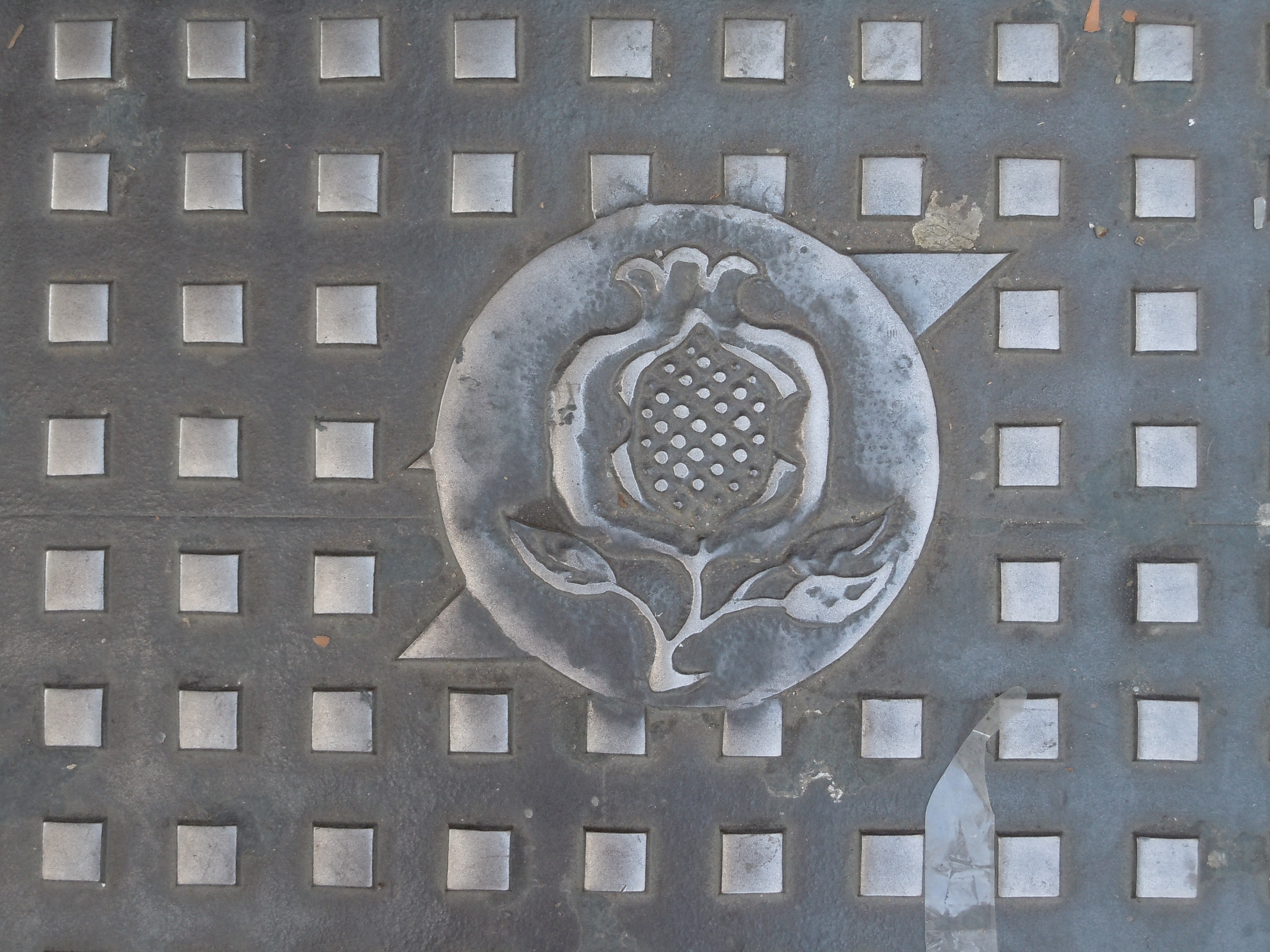
‘Granada’ in Castilian actually means pomegranate. Apparently, the original Arabic name for the city sounded something like ‘granada’ and when the Castilian-speaking Isabella came in, she decided to keep the name and embrace the fruit pun. To this day, the symbol of the city is a pomegranate and it is EVERYWHERE, from sidewalk tiles to pipes. I, ever a lover of a good play on words, made it my mission to take pictures of every pomegranate that I could spot.
The Language
‘Granadinos’ speak Castellano (Castilian), which is what we Americans know of as Spanish. {*History lesson* There are actually four official languages in Spain: Castilian, Catalan, Galician, and Basque. The reason why we consider Castilian to be ‘Spanish’ is because when Columbus came to conquer the New World, he was being backed by the Castilian Queen of Spain, Isabella, and thus went about his conquesting in her language.} However, a true Andalucian speaks with a heavy Andalucian accent – a little bit of lisping mixed with not pronouncing the end of most words. Think, ‘grazEEah,’ ‘PORfah,’ and ‘Como aySTA.’ It couldn’t be further from the Mexican Spanish that we’re exposed to in the States, so I was very quiet for about the first month…
A Few Key Phrases for Faking Fluency in Granada:
– Vale (bal-EE): said about 300 times every minute, this phrase essentially means ‘ok’ but can be used in any context to signify agreement. Frequently, entire phone conversations can consist of one person actually speaking and the other just ‘vale’ing their way through.
– Guapo/a (GUAHpo/pa): This literally translates as ‘cute/hot/beautiful’ but is used as a nickname to anyone and everyone that you’re even remotely close with. ¿Qué pasa, guapa? What’s up girl?
– No sé (No SAY): I don’t know. Or, the more vulgar version, No tengo ni puta idea. (translation not fit for public)
-¡Más chupitos, por favor! (Mass chooPEEtoes PORfah): I’ll give you a hint, chupitos are small alcoholic beverages served in single-serving glasses….
There is also a rich vocabulary of curse words and vulgar terms, but innocent eyes might be reading, and we wouldn’t want to corrupt them, now would we?
The Food
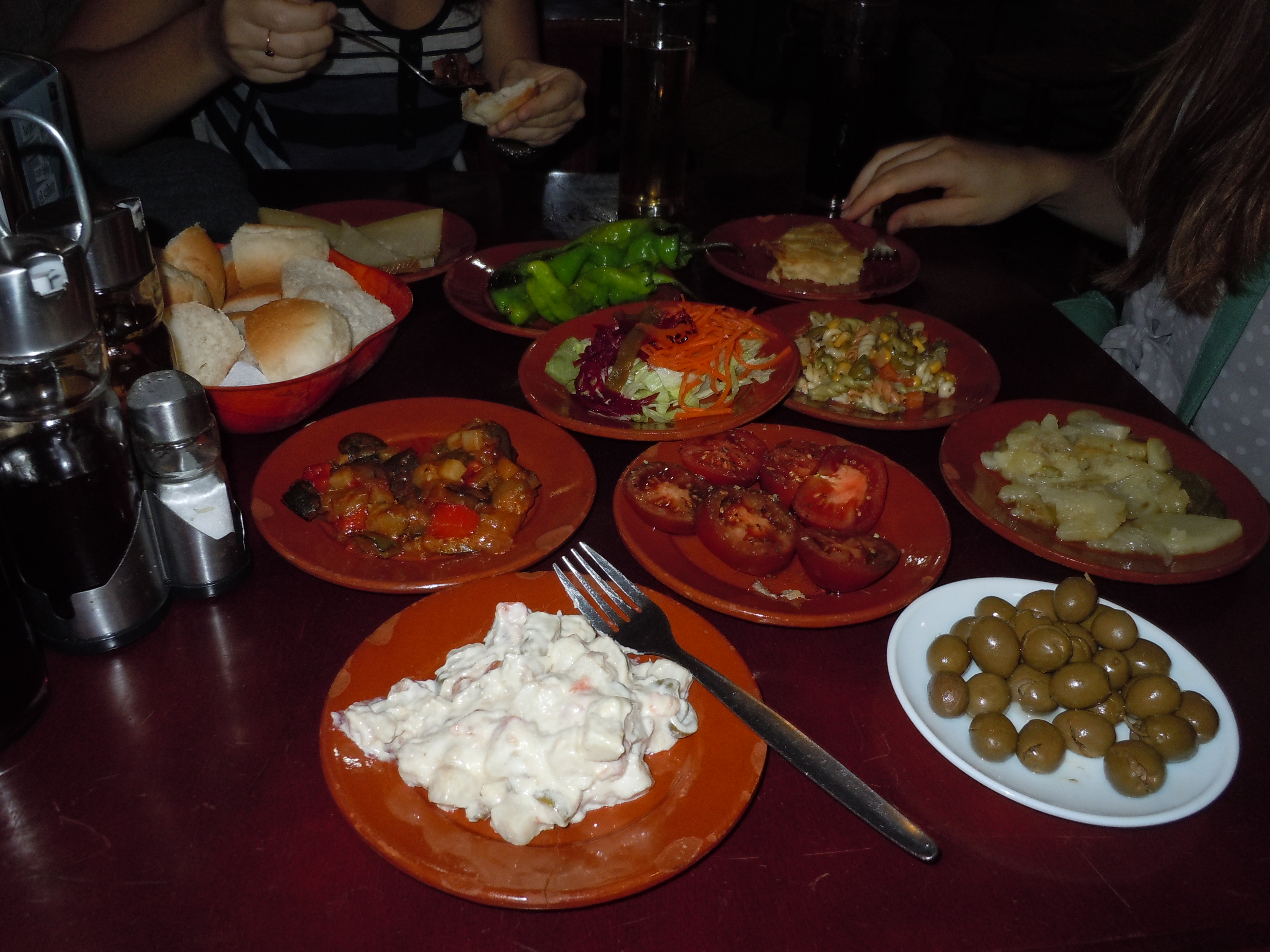
Andalucia, particularly Granada, is known for its tapas. Tapas are a poor college student’s dream come true: small plates of food complimentarily served alongside every alcoholic beverage ordered.
Spaniards love their meat, particularly the specially cured and thinly sliced jamón (ham) that seems to be snuck into everything. I kid you not, Spain is so crazy about this stuff that the interior decorating for some bars is just giant, cured, pig legs (hoof and all), suspended from the ceiling and covering the walls… it’s not a sight for the faint of stomach (or animal rights’ activists), to be sure. I wasn’t terribly crazy for the ham, but I did learn to love Manchego cheese (the Spanish version of our ubiquitous Cheddar, although I’d say that the flavor is closer to a slightly hardened version of Provolone), olives, and olive oil (by the liquid tonnage). Andalucia makes some AMAZING olives (hello, proximity to the Mediterranean), and, by extension, olive oil. The flavor of ‘humdrum’ olive oil in Granada was so good that I used it instead of butter on my toast. MMMMmmmmm…. I’m already drooling. Also, while I didn’t eat as much of these as I would have liked, a popular breakfast in Spain is Churros and Chocolate… a fantastic blend of fried dough (lighter and crispier than a doughnut) and thick, rich chocolate sauce for dipping (and drinking – you don’t waste this precious nectar-of-the-gods).
As far as liquid nutrition goes, I will say that Spain turned me into a passionate wino, particularly for wines from the Rioja region. And let’s not get started on the Sangria… I sampled quite a few different versions of this magical punch, but the generic recipe seemed to include red wine, oranges, apples, and cinnamon (yes, really) but could get a little crazy with additions like bananas, pineapples, and fruit juices. Ok, now I’m really drooling…


 Restless Spirit Syndrome